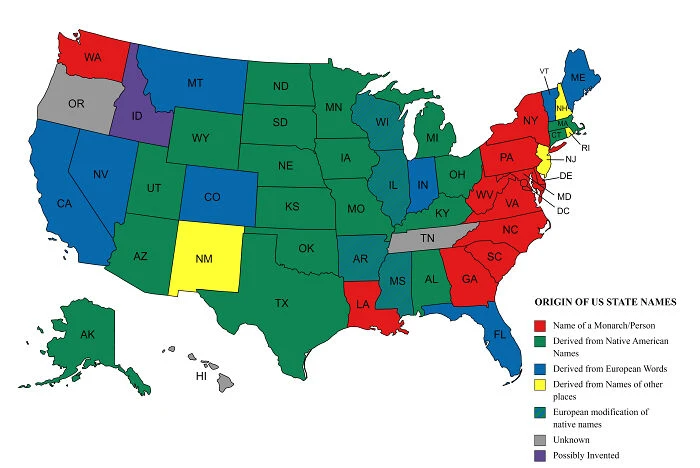
At first glance, U.S. state names might seem random—but they actually tell a fascinating story about exploration, colonization, native languages, and history. The map above breaks down the origins of state names using color, making it easy to see patterns across the country.
Native American Roots Dominate the Map
A large portion of U.S. states—especially in the Midwest and Great Plains—derive their names from Native American languages. States like Illinois, Iowa, Kansas, Missouri, Ohio, and Michigan reflect tribal names, words for rivers, or descriptions of the land long before European settlers arrived.
Named After People and Monarchs
Many states along the East Coast and South were named after European monarchs or notable individuals.
Examples include:
- Virginia (named for England’s “Virgin Queen,” Elizabeth I)
- Georgia (King George II)
- Louisiana (King Louis XIV of France)
- Maryland (Queen Henrietta Maria)
These names reflect early colonial influence and European control.
European Words and Places
Some states borrowed names directly from European languages or locations:
- California (from a Spanish novel)
- New Mexico (named after Mexico, which itself comes from Nahuatl)
- Pennsylvania (“Penn’s Woods” in Latin)
Modified Native Names
Several states are European adaptations of Native words. These names were often altered in spelling or pronunciation as they were recorded by explorers and settlers.
A Few Mysteries Remain
A small number of states still have uncertain or debated origins, reminding us that history isn’t always perfectly documented.
Big Picture Takeaway
This map shows that U.S. state names are more than labels—they’re historical fingerprints. From Native American languages to European royalty, the names reveal who lived on the land, who claimed it, and how cultures blended over time.
Sometimes, a map really does tell a story—if you know how to read the colors. 🗺️